
STUDY HUNGER • STUDENT SUCCESS
How to Prepare for Exams: 10 Smart Study Tips for Students
Build better habits, remember more, and walk into your next exam feeling prepared.

Exams are an important part of school life. They help students demonstrate what they have learned, but preparing for them can sometimes feel overwhelming. There may be several chapters to complete, difficult questions to practise, and limited time available after school.
The good news is that preparing for exams does not have to mean studying all day or memorising every sentence in a textbook. A clear plan, regular revision, practice questions, and healthy habits can make your preparation more organised.
In this Study Hunger guide, you will discover ten practical exam preparation tips that students can start using today. You do not need expensive equipment or paid applications. A textbook, notebook, pen, and a little planning are enough to begin.
1. Start Preparing Early
One common mistake is waiting until the last few days before an examination to begin serious preparation. When several subjects need attention at once, this can make it difficult to understand lessons properly and revise them more than once.
Start by checking your syllabus and identifying the chapters included in the examination. Mark the topics you understand well, the topics that need revision, and the topics you find difficult.
Then begin with a manageable task. For example, you could revise one science concept, solve five mathematics questions, or learn a few important history dates. Small tasks help you make progress without feeling that you must complete everything immediately.
2. Create a Realistic Study Timetable
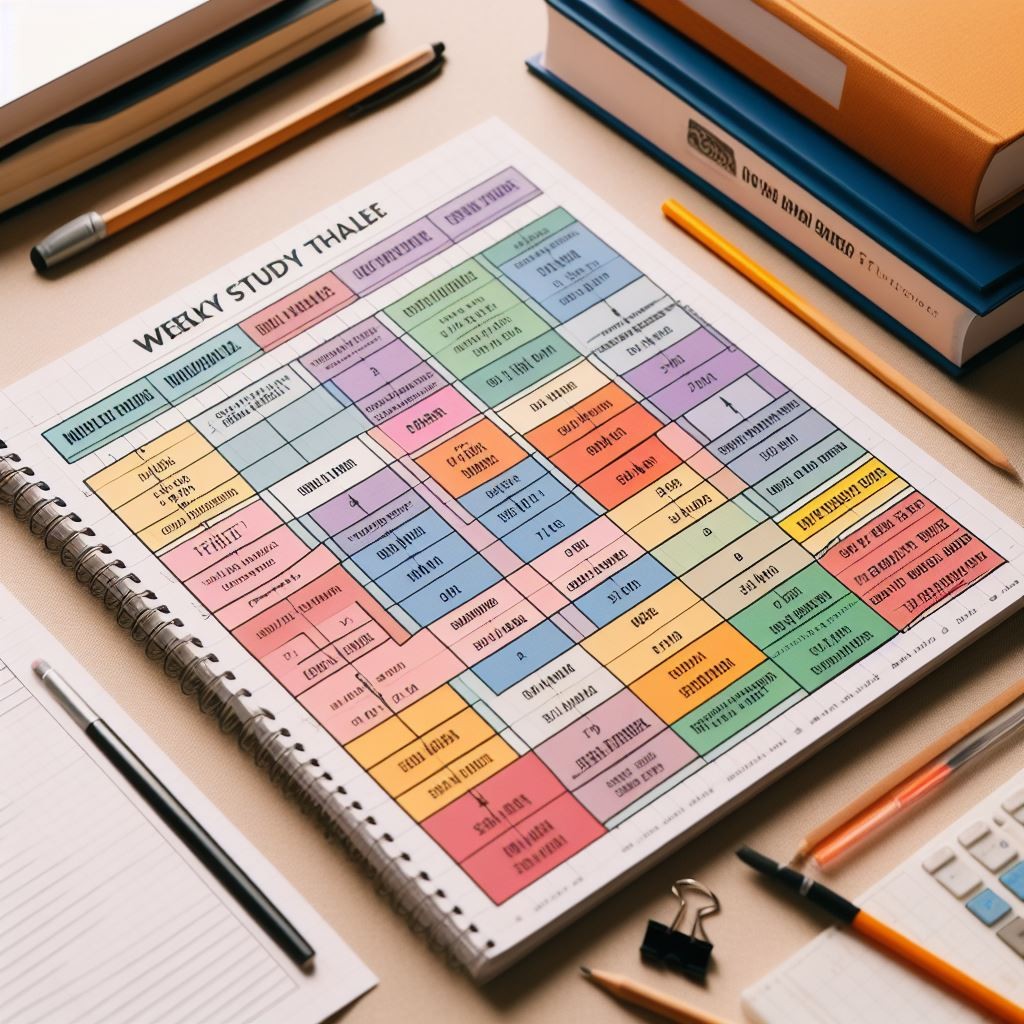
A timetable helps you decide what to study and when to study it. Without a plan, you might spend too much time on your favourite subject while forgetting to revise another subject that needs attention.
Write down your available study time after considering school, homework, meals, rest, and other responsibilities. Divide your work between subjects instead of trying to study everything in one session.
For example, you could use one session for mathematics practice, another for science revision, and a shorter session for language vocabulary. Adjust your plan according to your examination dates and the difficulty of each subject.
Keep your timetable flexible. If one chapter takes longer than expected, move the remaining work to another suitable session instead of abandoning the entire plan.
3. Understand Concepts Before Memorising
Memorising information without understanding it can make answering unfamiliar questions difficult. Try to understand the meaning behind a definition, formula, event, or scientific process before attempting to remember the details.
Suppose you are studying the water cycle. Rather than memorising four words separately, understand how water evaporates, condenses into clouds, and returns to the ground through precipitation.
Once you understand the process, explain it in your own words. You can then learn the correct scientific terms and practise writing an exam-ready answer.
This method is useful across subjects. In mathematics, understand why a formula works. In history, understand the causes and consequences of events. In languages, understand the meaning and structure of a sentence.
4. Use Active Recall
Active recall means trying to remember information without looking at your notes. It turns revision into a test of what you actually know.
First, read a small section of your textbook. Next, close the book and write down the main points you remember. You could also answer questions aloud or ask someone to quiz you.
Finally, open your book and check your answers. Identify missing information and correct any mistakes. Repeat the process for the topics that need more practice.
For example, after studying the parts of a plant cell, try listing them from memory and explaining their functions. This is more informative than simply rereading the same page several times.
5. Practise Previous Questions and Mock Tests
Knowing a topic and answering an examination question are related but different skills. Practice questions help you learn how to apply your knowledge, understand question wording, and organise written answers.

After revising a chapter, answer a few questions without checking the solutions immediately. When possible, use teacher-provided worksheets, official sample papers, or suitable previous examination papers.
You can also practise under timed conditions to understand how to distribute your time between questions. After finishing, check your answers carefully and identify where you lost marks.
Do not focus only on your score. Pay attention to what each mistake teaches you. Correcting a misunderstanding now can help you avoid repeating it in the actual examination.
6. Revise at Regular Intervals
Completing a chapter once does not mean you will remember every detail weeks later. Spaced revision involves reviewing material over several sessions instead of concentrating all revision into one long session.
For example, after learning a topic today, briefly review it tomorrow. Test yourself again later in the week, then revisit it the following week if necessary.
Use a notebook to record which topics you have revised and which ones still need attention. Difficult topics may need more frequent practice, while familiar topics may need only a short review.
Regular revision also helps you discover forgotten information early, leaving time to improve before the examination.
7. Keep Your Study Space Organised
Your study environment can influence how easily you concentrate. A crowded desk, unnecessary notifications, and frequently interrupted sessions can make it harder to stay focused on a task.
Before studying, keep the required textbook, notebook, pens, and other materials nearby. Choose a reasonably quiet place where you can work comfortably.
If your phone or tablet is needed for learning, open the material you need before starting and silence unrelated notifications when possible. Avoid switching between study tasks and entertainment every few minutes.
You do not need a perfect desk or an expensive study room. The goal is simply to create an environment that makes it easier to begin and continue your work.
8. Take Short Breaks
Trying to concentrate for too long without a break may leave you tired. Short breaks can help you reset your attention and return to your work with a clearer mind.
One approach is to study for 25 minutes and take a five-minute break. You can also choose shorter or longer sessions depending on your age, task, and concentration.
During a break, stand up, stretch gently, drink water, or look away from your screen. After the break, return to the task you planned to complete.
Remember that the purpose of a break is to support learning, not to create another distraction that makes it difficult to resume studying.
9. Get Enough Sleep Before Exams

Sleep is an important part of learning and memory. Staying awake late to finish every chapter may leave you tired and make it harder to concentrate the next day.
Try to maintain a regular sleep schedule, particularly during examination periods. Plan your revision early enough that you do not have to sacrifice rest to finish everything at the last moment.
On the evening before an examination, focus on reviewing important concepts, checking your materials, and preparing for the next day. Avoid starting several large chapters at the last minute if you can help it.
A rested mind is better prepared to concentrate, understand questions, and recall information than an exhausted one.
10. Review Your Mistakes and Improve
Every practice test gives you useful information about your preparation. Instead of feeling discouraged by an incorrect answer, investigate why it happened.
Was the concept unclear? Did you forget a definition? Did you misunderstand the question? Did you make a calculation mistake or fail to include an important point in a written answer?
Keep a mistake notebook with three things: the question you got wrong, the correct explanation, and a similar question to attempt later. Review this notebook during your next revision session.
Also, check whether your answers match the question asked. If a question requires three reasons, make sure you provide three relevant reasons rather than writing unrelated information.
A Simple Daily Exam Preparation Plan
Step 1: Spend a few minutes deciding your main study goal.
Step 2: Learn or revise one important topic.
Step 3: Close your textbook and recall the key points.
Step 4: Answer practice questions independently.
Step 5: Check your answers and correct mistakes.
Step 6: Decide what you need to revise next.
This plan can be adjusted to fit your available time. On busy days, complete a shorter session. When you have more time, work through additional questions or revisit a difficult topic.
How Study Hunger Encourages Better Learning
Study Hunger is an educational project built around a simple idea: helping students study, revise, and remember better.
We believe that effective learning should be organised, practical, and accessible to students. Better study habits begin with small actions: understanding one concept, testing your memory, correcting an error, and returning to a topic when it needs revision.
Our vision is to support students as they build these habits and develop a more confident approach to learning. For now, you can start applying the techniques in this article using your existing books and notebooks.
Your Next Exam Starts with Today's Habits
Plan your work. Practise what you learn. Review your mistakes. Make steady progress every day.
Study Hunger — Feed Your Mind.
Frequently Asked Questions
How many hours should I study every day?
There is no single ideal number for every student. Choose a realistic schedule based on your schoolwork, exam dates, concentration, and need for rest. Focus on productive learning rather than hours alone.
What should I do if I have very little time before an exam?
Check the syllabus, prioritise important and difficult topics, practise relevant questions, and review key concepts. Avoid spending all your remaining time rereading material you already know well.
How can I remember answers during an examination?
Practise recalling information without notes, answer sample questions, and revise at regular intervals. During the examination, read each question carefully and organise your thoughts before writing.
Can I prepare for exams without paid study apps?
Yes. Textbooks, notebooks, practice papers, a timetable, and active recall can help you build an effective study routine without spending money.
Study Hunger | Learn Better, Every Day.